Contract design patterns
Contract design patterns are reusable solutions to recurring problems in contract design and communication. Their adoption offers a structured and systematic approach to improving contract usability and clarity.

Examples of contract design patterns include timelines, swimlanes, [pari muuta].
Timelines
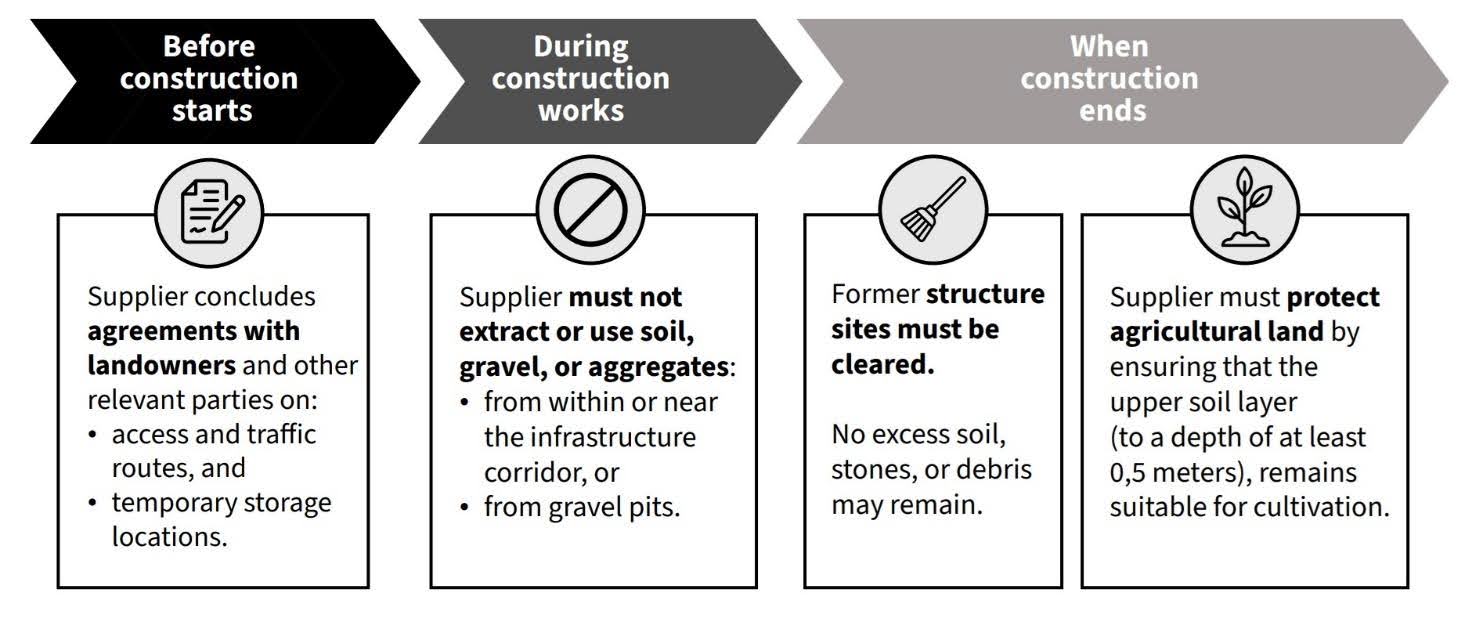
Many contract clauses describe obligations that unfold over time but present them as a single block of text. The timeline pattern restructures such clauses by aligning contractual commitments with key phases of the supply and delivery process. By making clear what is expected before, during, and after delivery, the pattern helps users quickly understand phase-specific responsibilities and supports the effective implementation of sustainability commitments across the supply chain.
Example
The following land use clause bundles several distinct obligations into a single provision, covering preparations before construction, restrictions during works, and restoration duties after completion.
Land use
The Supplier shall, prior to commencing works, enter into the necessary agreements with affected landowners and other relevant rights holders concerning access routes, traffic arrangements, and temporary storage areas. The Supplier shall not extract, remove, or use soil, gravel, or other aggregate materials from within or adjacent to the infrastructure corridor or from any gravel pit without the prior consent of the relevant landowner. Upon completion of demolition or removal works, the Supplier shall ensure that agricultural land is restored such that the upper soil layer, to a depth of at least 0,5 meters, remains suitable for cultivation. Former structure sites shall be cleared, ensuring that no surplus soil, stones, or debris remain on the site.
In the following timeline graph, the same obligations are visually reorganised according to the three main phases of the works.